

Felt desk mat upgrades are everywhere—especially among remote professionals and workspace enthusiasts who demand both function and style from their office setup. Whether you’re fine-tuning your desk for productivity or curating a minimal, sophisticated look, understanding the details behind wool felt desk pads is essential if you want your investment to last.
Key Takeaways
- The felt desk mat segment is experiencing the fastest growth in the global desk mat market, driven mainly by remote professionals and creatives seeking both aesthetics and ergonomic comfort.
- Premium options—especially from brands like Harber London and Grovemade—address common pain points such as pilling and slipping, but even the best wool felt desk pads have realistic maintenance needs.
- Key advanced considerations include mat thickness, edge finishing, eco-certifications, and compatibility with other workspace accessories—not just color or size.
- Why Felt Desk Mats Are Trending in 2024
- Real User Pain Points – What to Look Out For When Choosing a Felt Desk Mat
- Wool Felt vs. Leather Desk Pads – Which Is Right for You?
- What Makes a Premium Felt Desk Mat—Inside Harber London and Market Leaders
- Understanding Price Ranges—What Should You Expect to Pay in 2024?
- Aesthetic and Organizational Benefits of Minimal Felt Desk Mats & Grey Wool Mousepads
- Advanced Considerations Not Covered by Most Guides
- Conclusion
- FAQs
Why Felt Desk Mats Are Trending in 2024
The modern workspace has become a priority investment, especially for remote workers and creatives aiming for comfort and minimal style. The felt desk mat and wool felt desk pad category is at the forefront of this shift. In 2024, the global desk mat market is valued at $1.45 billion, with the felt segment showing the fastest CAGR at 7.6% through 2034. Over half of all e-commerce desk mat sales are now driven by remote professionals and students [1] [5].
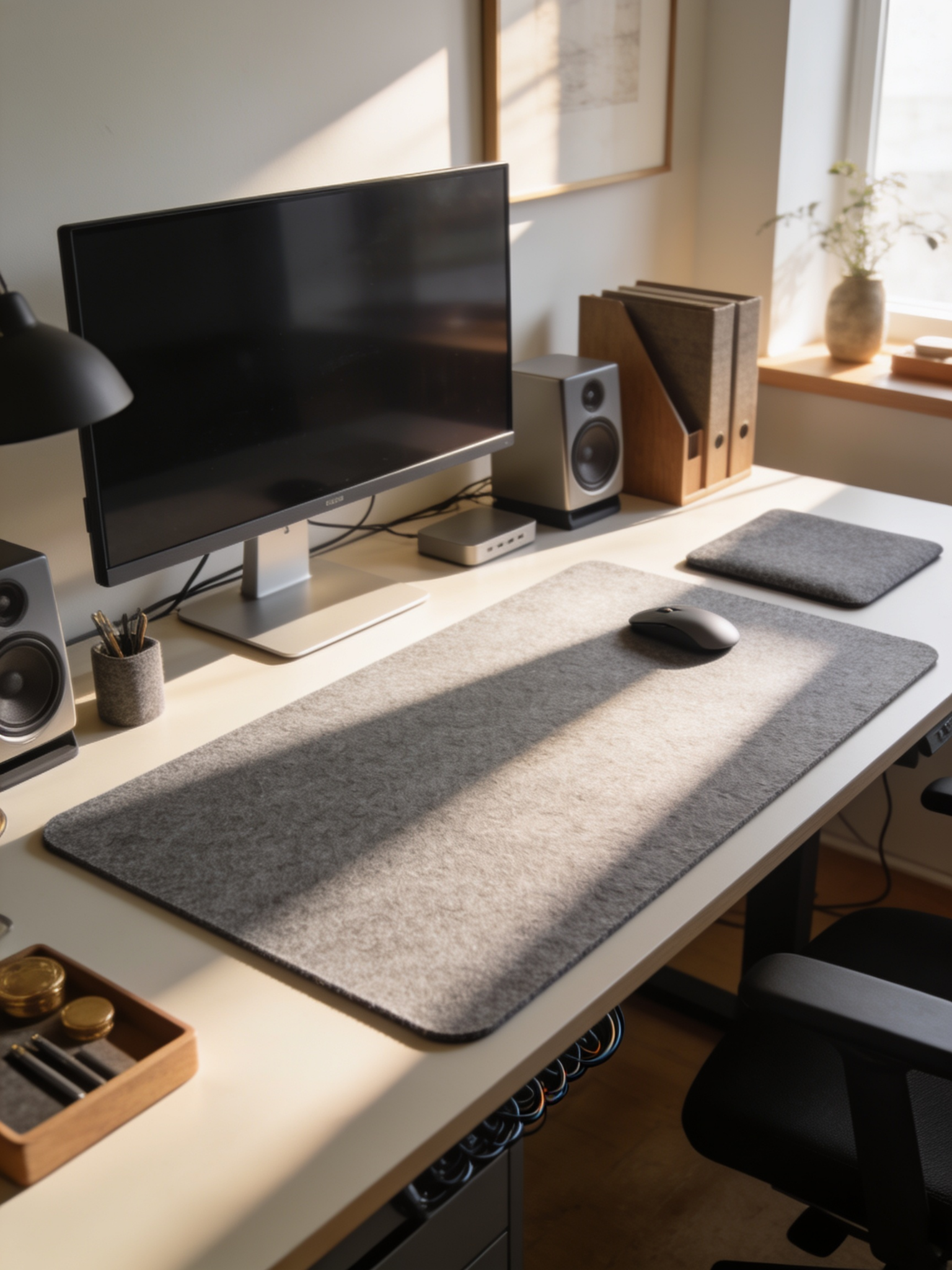
Felt (especially wool felt desk pads) offers an appealing middle ground between rigid plastic, cold glass, and pricey leather mats. Discerning professionals want a surface that looks refined, feels comfortable for long hours, protects expensive desks, and ties together their workspace in a visually cohesive way. As a result, premium felt desk mats and pads are increasingly sought after, with both individuals and commercial buyers leading this trend [4].
Real User Pain Points – What to Look Out For When Choosing a Felt Desk Mat
Selecting a felt desk mat can backfire if you overlook common user complaints. Three issues come up most often with felt and wool felt desk pads:
- Pilling and lint shedding: Cut or unfinished edges are prone to fuzz, especially on lower-quality mats.
- Slipping: Devices and the whole mat can shift on smooth desks, even when the underside is coated with latex or rubber.
- Surface compression: Heavier monitors or mechanical keyboards can leave lasting indentations. Wool compresses but does not spring back like memory foam, so cleaning (vacuuming or rolling) is needed to maintain the pad’s appearance.
Regular cleaning is a must. Use a lint roller weekly and run a handheld vacuum cleaner every two to four weeks to remove debris and keep the surface looking new. For stains, avoid soaking wool felt desk pads—dab gently with a lightly damp cloth and let it air dry flat.
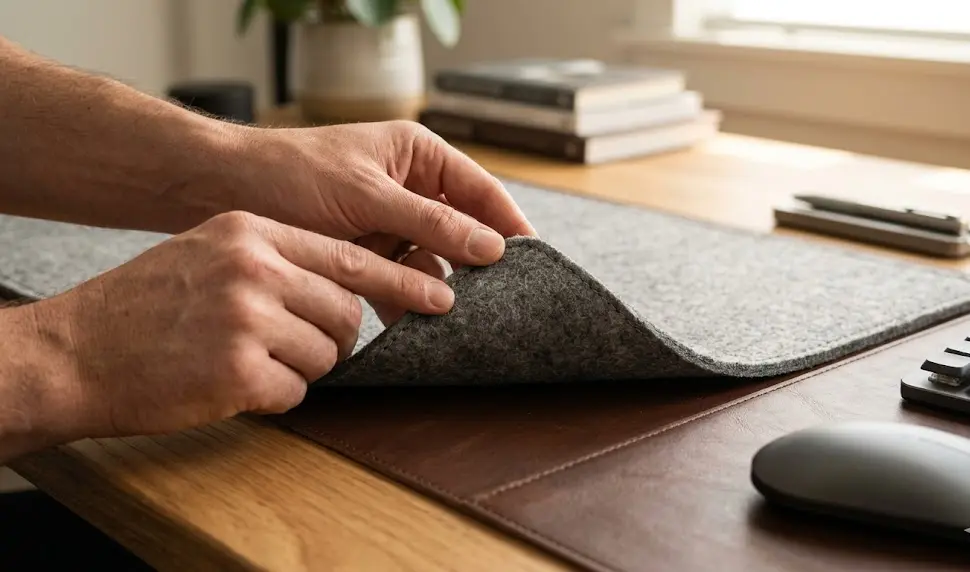
For organizational upgrades, consider pairing your felt desk mat with a minimalist desk setup or biophilic design—natural woods and muted colors amplify the mat’s aesthetic benefits.
If your main concern is keyboard stability and you use heavy devices, choose a thicker pad (at least 4mm). It reduces surface compression and increases overall comfort, much like the difference between a standard and premium ergonomic chair.
Wool Felt vs. Leather Desk Pads – Which Is Right for You?
Comparing felt vs leather desk pad comes down to several nuanced criteria: longevity, upkeep, comfort, cost, and subjective aesthetics. Each material excels in different settings.
| Feature | Wool Felt Desk Pad | Leather Desk Pad |
|---|---|---|
| Price (Avg. 2024) | $60–$240 | $90–$340 (40–60% premium) |
| Maintenance | Vacuum/lint roll, spot clean, avoid soaking | Wipe clean, condition leather occasionally |
| Longevity | 3–5 years (higher with premium edges and wool blends) | 5–10 years (proper conditioning extends life) |
| Comfort | Naturally soft, warm, tactile | Cool to touch, firmer, elegant |
| Aesthetic Variety | Wide: grey, graphite, earth tones | Classic brown, black, limited colorful options |
| Slipping Issues | Common unless underside is reinforced | Rare; heavier/leather grain grips desk |
Leather mats represent 15.2% of the market and often command a steeper premium due to their durability and prestige feel [10]. Wool felt, on the other hand, is preferred for warmth, cost-effectiveness, and a softer, muted look suited for creative workflows. For those seeking both tactile comfort and a calming minimalist vibe, a felt desk mat remains the recommended choice.
Related: For keyboard enthusiasts tweaking their setup, see how a ceramic keycap set transforms the acoustic and visual feel of your desk.
What Makes a Premium Felt Desk Mat—Inside Harber London and Market Leaders
The best wool felt desk pads are defined by three things: their materials, construction quality, and thoughtful design. Brands like Grovemade and Harber London have set the standard with 3-5mm thick merino wool felt, laser-cut or sewn edges, and subtle branding.
Commercial office buyers routinely select premium felt desk mats in the $60 to $150 range per unit, especially for initial bulk purchases that secure 20-35% off retail pricing [6]. The attention to finishing—like fine edge stitching and high-density wool—directly correlates to reduced pilling and longer-lasting pad structure. Grovemade’s mats, for example, were reviewed to resist major edge pilling compared to unfinished competitors [8].
Choose a harber london desk mat or similar if your setup demands visual harmony, tactile luxury, and assurances against common frustrations (like shedding or curl-up). Size and color selection is another distinguishing feature—most premium brands now offer extra-large and extra-long variants for dual-monitor and ultrawide setups.
Understanding Price Ranges—What Should You Expect to Pay in 2024?
The investment for a high-quality wool felt desk pad in 2024 ranges from $60 up to $240, reflecting variations in size, thickness, and finishing quality. For buyers in the UK or EU, expect the equivalent of £50–£190 or €55–€220. Bulk buyers—especially corporate and educational institutions—typically receive 20% to 35% discounts off these retail prices [6].
Choosing the right price point involves more than just desk size. Pad thickness (3mm, 4mm, or 5mm+) has a dramatic effect on comfort and longevity. Custom colorways and eco-certifications (like Oeko-Tex or recycled content) can also justify modestly higher costs for those seeking a sustainable or visually integrated workspace.
If budget is a constraint, carefully vet non-premium brands for basic protections: reinforced edges and at least 3mm density. Avoid pads that seem “bargain priced”—they typically wear down faster, pill quickly, and rarely match the performance or lifespan of wool felt desk pads from market leaders.
Aesthetic and Organizational Benefits of Minimal Felt Desk Mats & Grey Wool Mousepads
The visual appeal of a minimal, aesthetic desk mat setup is more than just a trend—it’s supported by data linking workspace style with productivity and focus. The demand for muted tones (especially grey wool felt mousepads) continues to rise among designers, creatives, and those who value discreet sophistication.
Fabric and felt mats are growing fastest specifically because they offer soft, ergonomic comfort while visually coordinating with other workspace essentials. Minimal grey or charcoal mats play well with both black and wood-top desks, downlighting, and organic workspace accents.
Grey wool felt mousepads, in particular, have become a key accessory—able to blend with a minimal gaming setup or a professional creative studio. The right choice can amplify your space’s calm, ordered feel, while providing a practical, all-day-comfort surface for mouse work.

Advanced Considerations Not Covered by Most Guides
Beyond the basics, advanced buyers should consider:
- Thickness and Weight: Thicker (5mm+) wool felt desk pads offer superior stability for dual monitor arms or heavy mechanical keyboards.
- Eco-Certifications: Few brands offer Oeko-Tex or recycled wool/felt. These provide peace of mind and assurance if sustainability is a core value.
- Edge Design: Meticulously finished or sewn edges dramatically reduce pilling—critical for long-term aesthetics and touch feel.
- Desk Compatibility: If you use under monitor light bars, cable channels, or custom desk organizers, double-check mat sizing for seamless fit with your existing accessories. See our Secretlab Magnus Pro review for examples of full-surface mat/desk integration.
Not all guides address these factors. Only a handful of premium wool felt desk pads feature 5mm+ thickness and certified sustainable sourcing—details that often separate mass-market from true investment-grade workspace gear.
For those refining both physical and visual ergonomics, explore accessory pairings like an ergonomic gaming mouse or premium headphones that accent your mat without adding clutter.
Conclusion
A well-chosen felt desk mat or wool felt desk pad elevates your workspace, supports daily comfort, and projects minimalist sophistication. Invest in premium materials, reinforced edges, and the right thickness for your setup. Maintenance is a must—but the benefits are more than surface deep. For anyone seeking a reliable, stylish, and truly functional desk upgrade in 2024, a felt desk mat is still a top-tier choice. Ready to refine your setup? Start by assessing your needs, set a budget, and compare reputable brands before you buy.
FAQs
What is the ideal thickness for a wool felt desk pad?
For most professional setups, 3mm to 5mm thickness balances comfort, stability, and longevity. Thicker pads (5mm+) are better for stability with heavy equipment or multi-monitor arms.
How do I prevent my felt desk mat from slipping?
If the supplied rubber/latex underside is not enough, add a thin silicone sheet or strips underneath, or consider securing the mat beneath heavier accessories like a monitor stand.
How should I clean my wool felt desk pad?
Use a handheld vacuum or lint roller regularly. Gently dab any stains with a damp cloth—never soak the felt. Let the pad air dry fully before use.
Do premium felt desk mats like Harber London actually last longer?
Yes. Mats from brands like Harber London or Grovemade use high-density merino wool and superior edge finishing, which both reduce pilling and extend the pad’s usable lifespan compared to budget offerings.
Are felt desk mats suitable for standing desks or heavy-duty setups?
Absolutely. Opt for pads that are 4mm or thicker, as these provide enhanced equipment stability and greater resistance to compression, even with frequent desk height adjustments.
—